


Never Alone
I was in my sophomore year of high school, just a typical student living a normal life. I was studying hard, volunteering with different organizations, and pursuing my passion for photography. Everything felt steady—until it didn’t.
It started with terrible headaches. My vision became blurry. After a series of checkups, they scheduled an MRI for a Monday afternoon. That’s when everything changed. The doctors found a brain tumor. A few hours later, they found three more tumors—in my spine.
I was sixteen. Overwhelmed didn’t even begin to describe it. I didn’t know how to react. This sort of thing didn’t happen to people I knew. It didn’t happen to me—Phillip Yurchenko.
The two weeks it took to get the official diagnosis were the longest days of my life. Waiting. Praying. Hoping. Doctors were throwing around terms I didn’t understand. It took everything in me not to Google anything. Over and over, I told myself: Do not Google. Do not Google. Do not Google.
I didn’t know what to do. Should I email my teachers and tell them I wouldn’t be in school? Should I tell my friends? Should I post it on Facebook? Everything was a blur. But the fear and confusion were sharp.
It’s been two years, and I still remember it all vividly—the pain, the uncertainty, the deep questions about whether I would ever feel like myself again.
Shortly after I was admitted to the hospital, Mrs. Potash from my local Chabad came to visit me. She looked me in the eye and said, “Phillip, you need to do a mitzvah. You need to do a mitzvah so its merit can bring you to a good state.” I didn’t fully understand, but I trusted her.
A few weeks later, her husband, Rabbi Levi Potash, visited and handed me a pair of brand-new tefillin. He explained that a teen group based in New York had sent them for me to use—so that while the doctors worked on healing my body, I could gain spiritual strength, too.
The tefillin were wrapped in a beautiful bag embroidered with my Hebrew name, Elnatan Shmuel. And stitched right beneath it was a blue and orange logo I didn’t recognize at the time: CTeen.
That was my first introduction to the Chabad Teen Network. But it wouldn’t be my last.
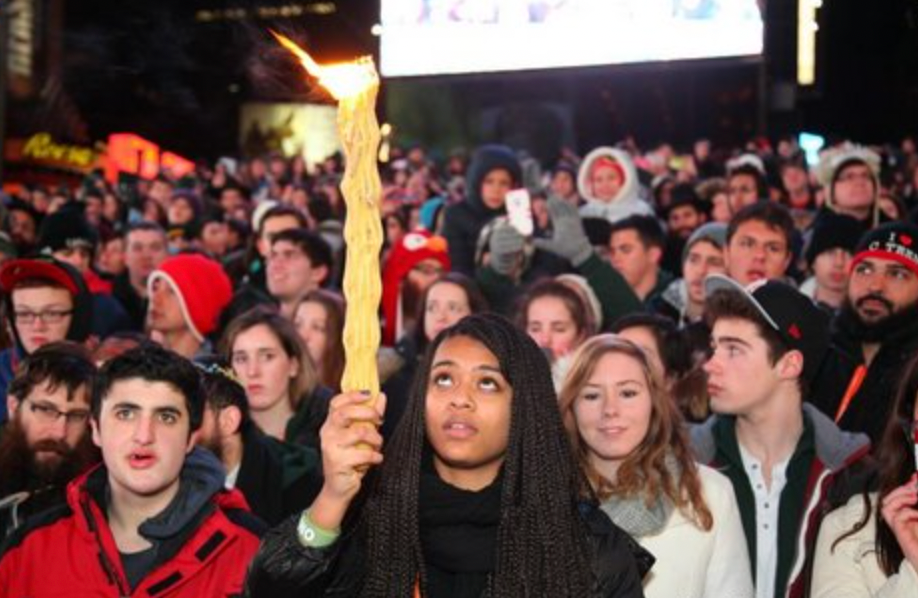
Just a few weeks later was the CTeen International Shabbaton in New York. I couldn’t attend, but I wasn’t forgotten. At the Shabbaton banquet, a campaign was launched in my honor. Over a thousand teens pledged to take on mitzvot in merit of my recovery.
I’ll never forget the moment I was handed a box overflowing with those pledges—hundreds of handwritten notes from Jewish teens I had never met. They were in New York, enjoying the weekend, surrounded by friends—and yet, they took the time to do something for someone they didn’t even know.
I was overwhelmed by their kindness. It moved me in a way nothing else had.
One year later, on the anniversary of my diagnosis, I entered remission.
That very week was the CTeen International Shabbaton. This time, I was there in person. I finally got to say thank you—face to face.
The weekend was action-packed, full of Jewish pride, meaning, and inspiration. The friends I made, the energy I felt—it was unforgettable. The Shabbaton ended with every teen choosing a mitzvah to take on. Just like they had done for me a year before.
I’ve been a part of other youth groups, but what I experienced at CTeen was different. It wasn’t about what trip you went on or what phone you had. At CTeen, it was about your chapter’s impact. What were you doing to make the world a better place? How were you growing in your Judaism?
That was the moment I knew—I had to spread this light. I had to act.
And as every dad in the room knows, when a teen decides something... we mean business.
I launched the first CTeen chapter in Northern California. With the support of Rabbi Levi and Ella Potash, we started CTeen MidPen.
Now, as the leader of CTeen MidPen, I’m giving back to the community that once lifted me up. Together, we’re harnessing the power of Jewish youth to create real, lasting change. We’ve gotten off to a strong start, and I’m excited for what’s ahead.
Together, we’ve already made a difference. And together, we’ll continue changing the world—one mitzvah at a time.



Before booking brickwork I wanted a grounded overview of Automatic Masonry’s approach. https://automaticmasonry.com/brick-repair-brickwork/ covers expert brick repair and brickwork across Toronto and the GTA, common damage signs and risks, the full range of solutions from cracks to custom features, the four-step restore process, local service areas, and transparent quotes after on-site assessment. Straightforward resource if you need structural integrity, matched appearance, and repairs built for local weather — not just a temporary cover-up.
The box of handwritten pledges from strangers is what hit me hardest, because it turns an abstract idea of community into something physical you can hold while stuck in a hospital bed. I've noticed that small, tangible gestures often land harder than grand statements when someone's world has just been upended, and it makes me wonder how many people quietly keep those notes for years. That long stretch of waiting before a diagnosis is its own kind of trial, and I found myself on https://casinospelpausfri.com one night comparing how different places handle uncertainty, which only reinforced how much a steady support system matters when everything feels like a blur.
More than just a typical basketball game, the game is where speed meets strategy, confidence blends with skill, and moments of entertainment transform into an exhilarating quest for glory—a place where anyone can dream of becoming the brightest star on the court. Basketball Stars
Phillip's story is the kind that stays with you—going from a frightening diagnosis at sixteen to building a whole CTeen chapter that lifts others up is remarkable. That box of handwritten pledges from strangers says everything about what community can do when someone is struggling. It's also striking how much personal and family history shapes our sense of who we are, and Ancestry reviews is a useful resource if you're curious about tracing your own roots and connections. Knowing where you come from often deepens the meaning of the communities you build today.